What does “heavy legs” actually mean?
People use “heavy legs” to describe several sensations: tiredness, aching, pressure, fullness, sluggishness, tightness or a feeling that the legs are harder to move than usual. Sometimes there is visible swelling; sometimes there is not.
The phrase itself does not identify the cause. Venous disease, fluid buildup, lymphedema, muscle fatigue and other conditions can overlap in how they feel. That is why it is more useful to look at the pattern than to assume a single explanation.
Useful questions to ask yourself
- Is the feeling in both legs or mostly one?
- Does it get worse later in the day or after long periods standing or sitting?
- Are your ankles or lower legs visibly swollen?
- Do you have varicose veins, skin discoloration, itching or aching?
- Does walking or elevating the legs change the feeling?
- Did the heaviness start suddenly, or has it developed gradually?
Why can heavy legs become more noticeable after 40?
There is no medical rule that heavy legs begin at age 40. The phrase “after 40” describes a common search and life stage, not a diagnostic threshold. Still, age can matter because some vein problems become more common over time and because cumulative factors — years of prolonged standing or sitting, pregnancies, weight changes, reduced activity, family history and previous blood clots — can affect risk.
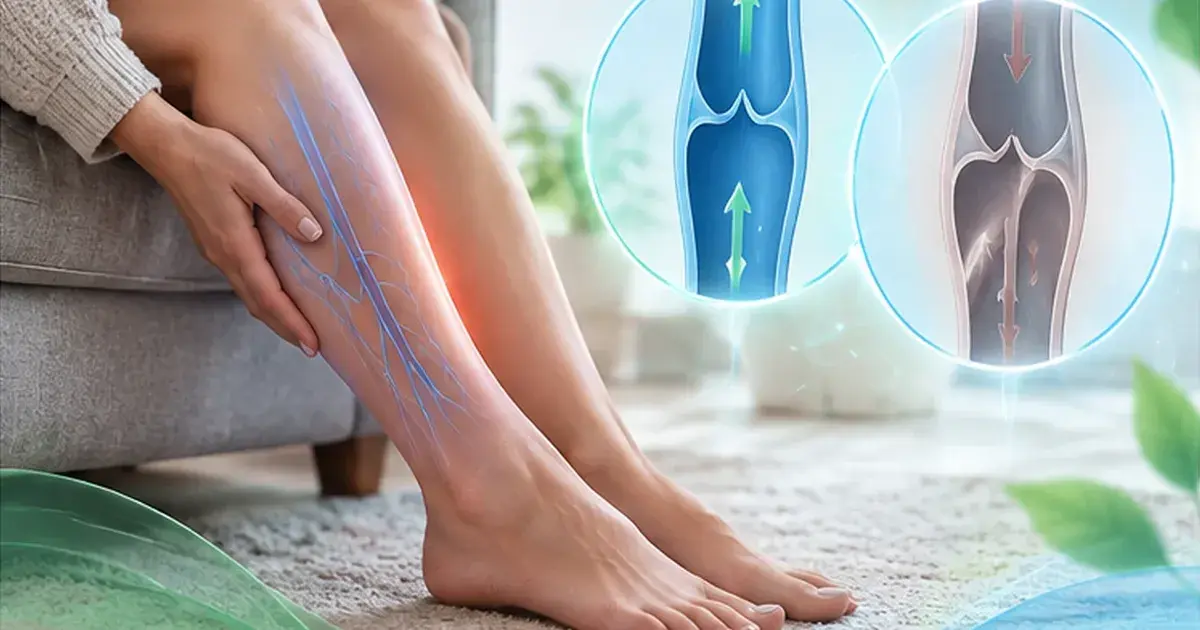
Cleveland Clinic notes that chronic venous insufficiency (CVI) usually affects people over 50 and that risk rises with age. CVI occurs when leg veins have trouble returning blood toward the heart, allowing blood to pool and pressure to rise in the veins. Symptoms can include achy or tired legs, swelling around the lower legs and ankles, varicose veins and a full or heavy feeling.
Common reasons legs may feel heavy, tired or swollen
Several everyday and medical factors can produce similar sensations. The table below is not a diagnostic checklist; it is a way to understand why “heavy legs” needs context.
| Possible contributor | How it may feel or appear | What matters |
|---|---|---|
| Long periods sitting or standing | Heaviness, tiredness or mild ankle/lower-leg swelling later in the day. | Reduced movement and gravity can contribute to venous pooling and fluid buildup. |
| Chronic venous insufficiency | Full, heavy or achy legs; ankle/lower-leg swelling; symptoms may worsen after standing; varicose veins or skin changes can occur. | CVI reflects impaired return of blood through the leg veins and becomes more common with age. |
| Varicose veins | Visible twisted veins, aching, heaviness, throbbing or swelling. | Varicose veins can be associated with venous symptoms and sometimes with CVI. |
| Edema / fluid buildup | Puffiness or swelling in the feet, ankles, calves or legs, sometimes with a heavy feeling. | Edema can result from prolonged inactivity but also from medicines or heart, kidney, liver, venous or lymphatic problems. |
| Lymphedema | Persistent swelling with heaviness, tightness or fullness; movement may become limited as swelling progresses. | Not all leg swelling is lymphedema. It occurs when lymphatic drainage is impaired or blocked. |
| Muscle fatigue or deconditioning | Legs feel tired or weak without obvious swelling, especially after activity or prolonged inactivity. | Musculoskeletal causes can overlap with vascular sensations and may need a different evaluation. |
Heavy legs: venous problem or lymphatic problem?
The circulatory and lymphatic systems both influence fluid in the legs, but they are not the same system. Online wellness content often blurs the two, which can make ordinary symptoms sound more specific than they really are.
Venous pattern
Venous disease can cause blood to pool in the legs. CVI may produce heaviness, aching, swelling, varicose veins and symptoms that are more noticeable after standing or toward the end of the day.
Lymphatic pattern
Lymphedema occurs when lymphatic drainage is impaired. It can cause persistent swelling along with heaviness, tightness or fullness, but those symptoms are not unique to lymphedema.
A leg can also have more than one contributing issue. For example, longstanding venous disease and tissue swelling can coexist. That is another reason a symptom description alone cannot reliably identify the underlying mechanism.
Why do legs often feel heavier at the end of the day?
If you spend many hours upright or in one position, gravity continually works against the return of blood from the legs. Your calf muscles normally help by squeezing the veins as you walk — sometimes called the calf-muscle pump. Less movement means less help from that pump.
Gravity adds pressure
Blood in the leg veins must travel upward toward the heart, working against gravity.
Movement helps return flow
Walking and ankle movement activate the calf muscles, which help push venous blood upward.
Pooling can feel heavy
When return flow is less efficient, pressure and fluid buildup can contribute to aching, fullness or swelling.
This pattern is compatible with venous causes, but it is not proof of CVI. Persistent symptoms, visible swelling or skin changes should be evaluated rather than self-diagnosed.
What may help legs that feel heavy after a long day?
When symptoms are mild and related to prolonged sitting or standing, practical measures often focus on restoring movement and reducing uninterrupted time in one position. If you have an established vascular or lymphatic condition, follow the plan given by your healthcare professional.
Walk regularly
Walking activates the calf-muscle pump and can help move venous blood back toward the heart.
Break up long sitting or standing
Short movement breaks reduce uninterrupted immobility and may help when symptoms build during the day.
Elevate your legs
For some forms of mild swelling, raising the legs while resting can reduce pressure and fluid accumulation.
Discuss compression if symptoms recur
Compression stockings are used for some venous conditions, but the type and pressure should fit the cause and your health situation.
Should you simply “drink more water” or take a diuretic?
Leg heaviness and swelling are not one-size-fits-all fluid problems. Prescription diuretics are used for selected medical causes of edema and should not be started as a generic solution. The more useful first question is why the legs feel heavy or swollen.
What about lymphatic drainage for heavy legs?
Manual lymphatic drainage (MLD) is a specialized gentle-massage technique used as part of care for selected people with lymphedema. Cleveland Clinic notes that people without lymphedema may not see meaningful results from lymphatic massage.
If your main pattern is heaviness after standing, visible varicose veins or ankle swelling late in the day, a venous cause may be at least as relevant as a lymphatic one. That is why identifying the cause matters before assuming “lymphatic drainage” is the right solution.
When should heavy legs be medically evaluated?
Schedule an evaluation if leg heaviness is new, persistent, worsening, repeatedly accompanied by swelling, or affecting your ability to walk or carry out normal activities. Visible varicose veins, skin discoloration, sores, repeated swelling or a clear difference between the two legs are also worth discussing.
Seek prompt or emergency medical care for warning signs such as:
- Sudden swelling, pain or tenderness in one leg.
- Warmth, redness or discoloration in the affected leg.
- Difficulty breathing or unexplained shortness of breath.
- Chest pain, especially if it worsens with breathing or coughing.
- Coughing up blood, marked lightheadedness or fainting.
The CDC lists swelling, pain or tenderness, warmth and redness/discoloration among common DVT symptoms. Pulmonary embolism symptoms can include difficulty breathing, chest pain, coughing blood, abnormal heartbeat, lightheadedness or fainting. These are not symptoms to manage with a wellness product.
Where do “lymphatic support” supplements fit?
People searching for heavy legs, swelling or fluid retention may encounter supplements marketed with phrases such as “lymphatic flow,” “natural drainage,” “fluid balance” or “circulation support.” Those phrases describe product positioning; they do not establish that a supplement treats chronic venous insufficiency, lymphedema, edema, blood clots or another cause of leg heaviness.
If you are researching a supplement because its marketing seems to match your symptoms, evaluate the actual formula and evidence separately from the symptom itself. A supplement review should not substitute for figuring out why new or persistent leg symptoms are happening.

Seen Linfozen while researching heavy legs or lymphatic support?
Linfozen is a botanical dietary supplement marketed with lymphatic-flow, natural-drainage, fluid-balance and circulation language. Our independent review checks the current ingredients, pricing, purchase terms and limits of finished-product evidence.
Read the Independent Linfozen Review → Editorial link • The review contains disclosed affiliate links. NutraNova Health does not present Linfozen as a treatment for heavy legs, swelling or venous disease.Frequently asked questions
Why do my legs feel heavy after 40?
Heavy legs are a symptom rather than a diagnosis. Long periods sitting or standing, venous pooling, varicose veins, chronic venous insufficiency, swelling, inactivity and other health factors can contribute. Age 40 is not a medical cutoff, so persistent symptoms should not simply be attributed to aging.
Why do my legs feel heavier at the end of the day?
Symptoms that build after many hours upright can occur when pressure rises in the leg veins and return flow is less efficient. Chronic venous insufficiency can cause aching, swelling and a full or heavy feeling, often after standing or later in the day.
Are heavy legs always caused by poor circulation?
No. Venous problems are one possibility, but heavy legs can also occur with edema, lymphedema, muscle fatigue and other conditions. The pattern, associated swelling or skin changes, and whether one or both legs are affected help guide evaluation.
Can walking help heavy legs?
Walking activates the calf-muscle pump, which helps move venous blood upward from the legs. Regular movement and avoiding long uninterrupted periods in one position may help some venous symptoms, but persistent or worsening symptoms still deserve evaluation.
Are heavy legs a sign of lymphedema?
They can be one symptom of lymphedema, especially when accompanied by persistent swelling, tightness or fullness, but heaviness alone is not enough to identify a lymphatic problem. Venous and other causes can feel similar.
When are heavy legs a warning sign?
Sudden unexplained one-sided swelling, pain, warmth or redness needs prompt medical assessment. Difficulty breathing, chest pain, coughing blood, marked lightheadedness or fainting can be signs of pulmonary embolism and require emergency medical care.
Do lymphatic supplements treat heavy legs?
A dietary supplement should not be used as a substitute for diagnosing the cause of heavy legs. Marketing about lymphatic flow or fluid balance does not prove that a product treats edema, lymphedema, venous disease, blood clots or another medical condition.
Sources & editorial references
NutraNova Health used established medical references to verify the venous, swelling, lymphatic and blood-clot context described on this page. These references provide general educational information and do not diagnose an individual reader.
Used for CVI symptoms, venous pooling, age and risk-factor context, the calf-muscle pump, leg elevation and compression therapy.
Used for the association between varicose veins, heavy-feeling legs, aching and swelling.
Used for common and serious causes of leg swelling, including prolonged sitting or standing, venous disease and lymphatic causes.
Used for the distinction between lymphedema and other swelling, plus heaviness, tightness and fullness as possible lymphedema symptoms.
Used for DVT and pulmonary embolism warning signs and the need for prompt or emergency medical care.
Used for the clinical role and limitations of manual lymphatic drainage in lymphedema care.

Valeria researches nutrition, dietary supplements and natural wellness topics with an emphasis on evidence, transparent product information and realistic consumer expectations.